Back to Library
The Bear and the Chessboard: A Castle of Signals
Preview
High Intermediate (B1 High) CEFR B1

The Bear and the Chessboard: A Castle of Signals

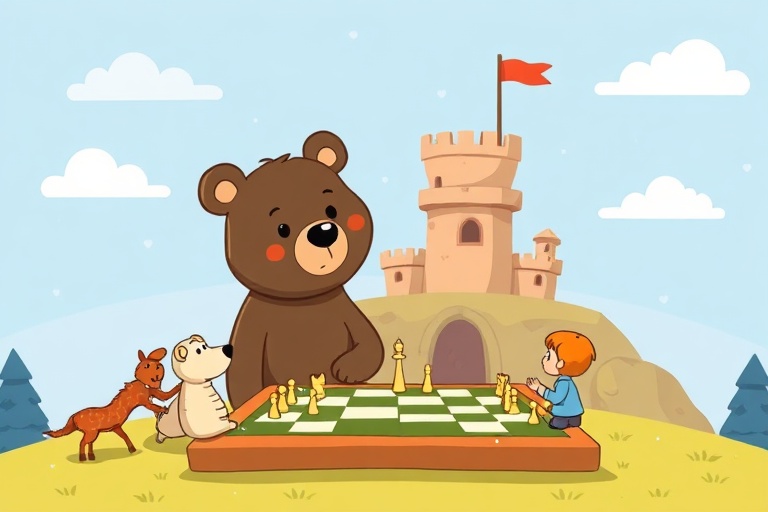
Barnaby, a young bear with a passion for chess, had been invited to the mysterious Castle of Neuronia for a special tournament. The castle stood on a hill, its windows glowing like eyes in the twiligh...

Duration

5 min read

Length

320 words

Story

5 paragraphs

Story Excerpt

Sample preview reading passage

Paragraphs 1–2 of 5

Barnaby, a young bear with a passion for chess, had been invited to the mysterious Castle of Neuronia for a special tournament. The castle stood on a hill, its windows glowing like eyes in the twilight. As he stepped through the heavy oak doors, a cold draft whispered past him. He clutched his lucky chess piece, a small silver knight, and felt a shiver run down his spine. However, he knew that overcoming fear was the first step to victory.

Inside, the great hall was filled with strange mechanical devices and flickering lights. A wise old owl named Professor Synapse greeted him. 'Welcome, Barnaby. This castle is like your brain, the body's control center. Every move you make is a signal sent by your nerves.' Barnaby listened carefully, his fear slowly turning into curiosity. He realized that his nervousness was just a signal from his body, and he could control it.


Enjoying the preview?

Sign in to read the full story, track your progress, and earn rewards.

Complete Story & Ending Interactive Vocabulary & Quizzes Track Reading Streak & XP
Educational Objectives

Story Details

Grammar focus and learning objectives covered in this story.

Grammar Level

B1 · Past Simple, Past Perfect, Modal Verbs, Gerunds

Learning Outcomes

  • Read a story about a bear in a castle and answer comprehension questions.
  • Recognise and use the past perfect to show the order of past events.
  • Use modal verbs like 'can', 'could', and 'must' to express ability and necessity.
  • Identify gerunds used as subjects in sentences.
  • Explain how the brain and nerves work together to control the body.

Grammar Focus

Past Perfect: had + past participle

We use the past perfect to talk about an action that happened before another action in the past. It helps show the order of events.

“ Barnaby, a young bear with a passion for chess, had been invited to the mysterious Castle of Neuronia for a special tournament.
Tip: Use the past perfect when you need to make it clear that one past event happened before another.
Modal verbs for ability and possibility: can, could, must

Modal verbs like 'can', 'could', and 'must' express ability, possibility, or necessity. They are followed by the base form of the verb.

“ He could face any challenge.
Tip: Remember that modal verbs do not change form (no -s in third person) and are always followed by the infinitive without 'to'.
Gerunds as subjects: Verb + -ing

A gerund is a verb form ending in -ing that functions as a noun. It can be the subject of a sentence.

“ Overcoming fear was the first step to victory.
Tip: When a gerund is the subject, the verb that follows is singular (e.g., 'Overcoming fear was...').

Reading tip

Daily Habit

Read 10–15 minutes every day. Short daily sessions build vocabulary faster than one long session a week — consistency beats intensity.

Create a free account and turn this tip into a daily habit — full stories, quizzes, and progress tracking included.

More Stories to Read

Explore other popular stories from our reading library.

View all