Back to Library
The Dolphin's Journey: A Lesson in the Volcano's Shadow
Preview
High Intermediate (B1 High) CEFR B1

The Dolphin's Journey: A Lesson in the Volcano's Shadow

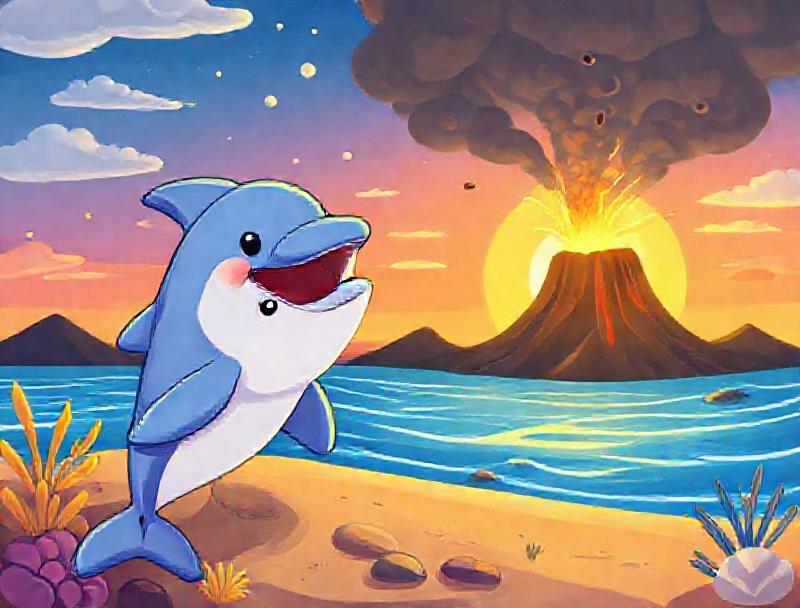
Kai, a young dolphin, had always been told that actions speak louder than words. His pod lived near a restless volcano that rumbled beneath the waves. One day, a group of humpback whales passed by, si...

Duration

5 min read

Length

300 words

Story

5 paragraphs

Story Excerpt

Sample preview reading passage

Paragraphs 1–2 of 5

Kai, a young dolphin, had always been told that actions speak louder than words. His pod lived near a restless volcano that rumbled beneath the waves. One day, a group of humpback whales passed by, singing their haunting migration songs. Kai watched them, fascinated by their size and grace. He decided to follow them, eager to learn their secrets.

As Kai swam after the whales, he struggled to keep up. The whales used their blowholes to breathe, spouting mist into the air. Kai, a mammal like them, also needed to surface for air. However, he relied on echolocation to navigate the dark waters. He clicked and listened, but the whales' deep calls confused his sonar. 'Stay close,' his mother had warned, but Kai ignored her words and pressed on.


Enjoying the preview?

Sign in to read the full story, track your progress, and earn rewards.

Complete Story & Ending Interactive Vocabulary & Quizzes Track Reading Streak & XP
Educational Objectives

Story Details

Grammar focus and learning objectives covered in this story.

Grammar Level

B1 · Present Perfect, Past Simple, Third Conditional

Learning Outcomes

  • read a story about marine mammals and identify key facts about their breathing and communication.
  • use target vocabulary like mammal, blowhole, pod, echolocation, and migration in context.
  • recognise and use the third conditional to talk about hypothetical past situations.
  • answer comprehension questions about the story's events and moral.
  • summarise the story's main idea and lesson in your own words.

Grammar Focus

Present Perfect: subject + have/has + past participle

We use the present perfect to talk about experiences or actions that happened at an unspecified time before now, or that have a result in the present.

“ He had also discovered the importance of helping marine mammals in danger.
Tip: Use present perfect with 'already', 'yet', 'ever', 'never' to talk about life experiences.
Past Simple: subject + verb (past form)

We use the past simple to talk about completed actions in the past at a specific time.

“ Kai swam after the whales, but he struggled to keep up.
Tip: Regular verbs add -ed, but many common verbs are irregular (e.g., swim → swam, catch → caught).
Conditional (Third): If + past perfect, would have + past participle

We use the third conditional to imagine a different past outcome that did not happen.

“ If it hadn't rained earlier, the park would have been crowded.
Tip: Use the third conditional to express regrets or hypothetical past situations.

Reading tip

Daily Habit

Say new words out loud or use them in your own sentence — actively using a word moves it into lasting memory.

Create a free account and turn this tip into a daily habit — full stories, quizzes, and progress tracking included.

More Stories to Read

Explore other popular stories from our reading library.

View all