Back to Library
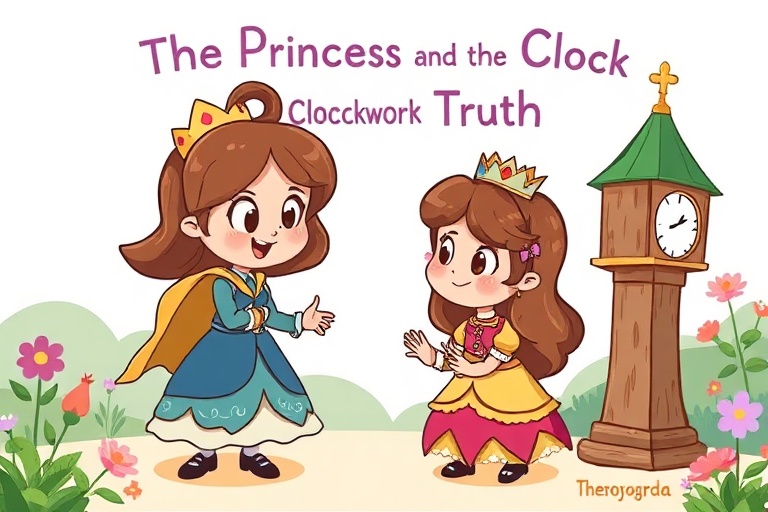
The Princess and the Clockwork Truth
Preview
Proficient (C2 Low) General Reading CEFR C2

The Princess and the Clockwork Truth

Within the labyrinthine corridors of the royal automaton works, where the air tasted of solder and scented cedar, Princess Elara found a serenity that the gilded court could never bestow. Her mornings...

Duration

5 min read

Length

954 words

Story

9 paragraphs

Story Excerpt

Sample preview reading passage

Paragraphs 1–2 of 9

Within the labyrinthine corridors of the royal automaton works, where the air tasted of solder and scented cedar, Princess Elara found a serenity that the gilded court could never bestow. Her mornings were spent not upon silk cushions, but on a humble stool before the lathes, watching the master toymaker calibrate the delicate interlocking cogs. The rhythmic hiss of the steam press and the intermittent chiming of half-finished mechanical birds composed a symphony more honest than any courtly flattery. It was here, amid the precisely arrayed chaos of creativity, that the first insidious whisper of a falsehood began to take root.

On a particular Tuesday, the master toymaker, a man named Aldous, unveiled his magnum opus: a clockwork dragon the size of a mastiff, designed to roar and breathe a harmless vapor of chalk. Yet Elara, with her uncanny aptitude for mechanical nuance, noticed a subtle aberration in the creature's motion. Its golden eye, meant to be a placid amber, flickered with an unsettling crimson tint at the periphery, and its joints emitted a grinding cadence that pulsed with an almost sentient malevolence. Aldous, however, saw only his masterpiece, and Elara, loath to shatter his ecstasy, murmured a genteel compliment instead of voicing her trepidation.


Enjoying the preview?

Sign in to read the full story, track your progress, and earn rewards.

Complete Story & Ending Interactive Vocabulary & Quizzes Track Reading Streak & XP
Educational Objectives

Story Details

Grammar focus and learning objectives covered in this story.

Grammar Level

C2 · Past Simple Passive, Past Perfect, Third Conditional

Learning Outcomes

  • Recognise and use the past simple passive to shift focus from the doer to the action in descriptive narratives.
  • Use the past perfect to sequence past events clearly and show which action happened first.
  • Form and apply the third conditional to discuss hypothetical past scenarios and their consequences.
  • Analyse how advanced grammar structures contribute to tone and meaning in literary texts.
  • Infer the moral of a story by examining the relationship between language choices and character development.

Grammar Focus

Past Simple Passive: was/were + past participle

Use the past simple passive to focus on the action or the receiver of the action rather than the doer, especially when the doer is unknown, unimportant, or obvious from context.

“ The creature, which had been codified in ledgers as a mere prototype, began to stalk the silent aisles, its movements fluidly malevolent, drawing energy from every piece of misinformation Elara had ever innocently circulated.
Tip: Use the passive when the action matters more than who performed it, but avoid overusing it—mix in active sentences for clarity and variety.
Past Perfect: had + past participle

Use the past perfect to describe an action that happened before another past action or time, clarifying the sequence of events.

“ Every time she had waved aside a malfunction as 'a mere quirk,' or praised a subpar finish as 'character,' she had nourished this intangible devourer.
Tip: Use the past perfect only when you need to show that one past action happened before another; otherwise, simple past is usually enough.
Third Conditional: If + past perfect, would have + past participle

Use the third conditional to talk about hypothetical situations in the past that did not happen, often to express regret or imagine different outcomes.

“ If she had spoken the truth earlier, the dragon might never have come to life.
Tip: Remember that the third conditional always refers to the past and is often used to express criticism or regret about something that didn't occur.

Reading tip

Daily Habit

Re-read a story you enjoyed. Each pass deepens comprehension and helps new words stick in long-term memory.

Create a free account and turn this tip into a daily habit — full stories, quizzes, and progress tracking included.

More Stories to Read

Explore other popular stories from our reading library.

View all