Back to Library
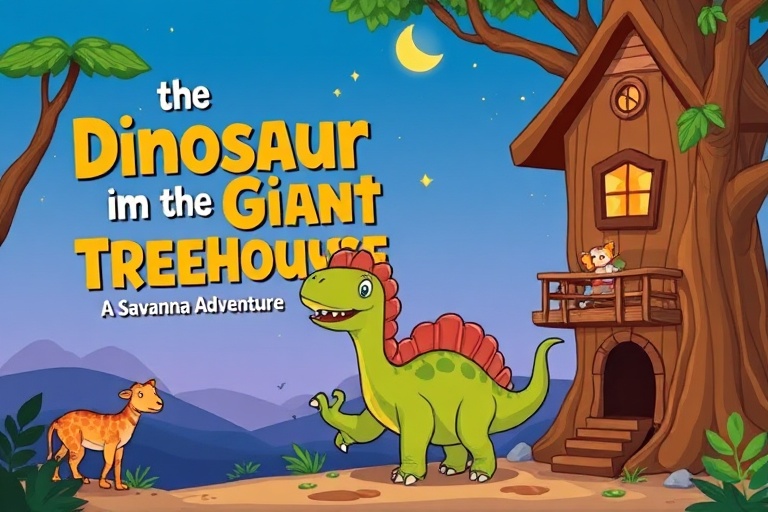
The Dinosaur in the Giant Treehouse: A Savanna Adventure
Preview
High Elementary (A2 High) CEFR A2

The Dinosaur in the Giant Treehouse: A Savanna Adventure

In the heart of the savanna, where the grass grows tall and golden, there lived a young zebra named Zara. Zara loved to graze with her family, but she often dreamed of adventure beyond the herd. One d...

Duration

5 min read

Length

250 words

Story

4 paragraphs

Story Excerpt

Sample preview reading passage

Paragraphs 1–2 of 4

In the heart of the savanna, where the grass grows tall and golden, there lived a young zebra named Zara. Zara loved to graze with her family, but she often dreamed of adventure beyond the herd. One day, she heard about a great competition in the giant treehouse that stood on the hill. The prize was a magical horn that could call rain during a drought. Zara wanted to win it more than anything.

Zara set off alone, following the migration path that many animals took each year. Along the way, she met a wise old dinosaur named Dino, who lived in the giant treehouse. Dino was gentle and kind, and he loved to watch the savanna from his home. He told Zara, "The competition is not just about speed; it is about patience and understanding the savanna." Zara listened carefully, but she was eager to win.

Enjoying the preview?

Sign in to read the full story, track your progress, and earn rewards.

Complete Story & Ending Interactive Vocabulary & Quizzes Track Reading Streak & XP
Educational Objectives

Story Details

Grammar focus and learning objectives covered in this story.

Grammar Level

A2 · Past Simple, Relative Clauses, Because-clauses

Learning Outcomes

  • Read and understand a short story about animals on the savanna.
  • Recognise and use past simple verbs to talk about past events.
  • Identify relative clauses with 'who' and 'that' in sentences.
  • Explain the food chain from grasses to grazers to predators.
  • Use new vocabulary like 'savanna', 'predator', 'graze', 'migration', and 'drought'.

Grammar Focus

Past Simple: subject + verb(-ed) or irregular past

We use the past simple to talk about actions that happened and finished in the past. Regular verbs add -ed, but many common verbs are irregular (e.g., 'grew', 'met', 'saw').

“ Zara set off alone, following the migration path that many animals took each year.
Tip: Look for time words like 'yesterday', 'last year', or 'one day' to know when to use the past simple.
Relative Clauses: who/which/that + clause

We use relative clauses to give more information about a person or thing. 'Who' is for people, 'which' for things, and 'that' can be used for both.

“ Dino, who had been watching, smiled and said, "You have shown the true spirit of the savanna."
Tip: Put the relative clause right after the noun it describes, and use commas if the information is extra.
Because + clause, result clause

We use 'because' to show the reason for something. The result can come before or after 'because'.

“ Because of her kindness, she lost the race.
Tip: You can also use 'because of' followed by a noun phrase, like 'because of her kindness'.

Reading tip

Daily Habit

Pick stories slightly below your level. Understanding about 95% of the words keeps reading enjoyable and effective.

Create a free account and turn this tip into a daily habit — full stories, quizzes, and progress tracking included.

More Stories to Read

Explore other popular stories from our reading library.

View all