



Back to Library
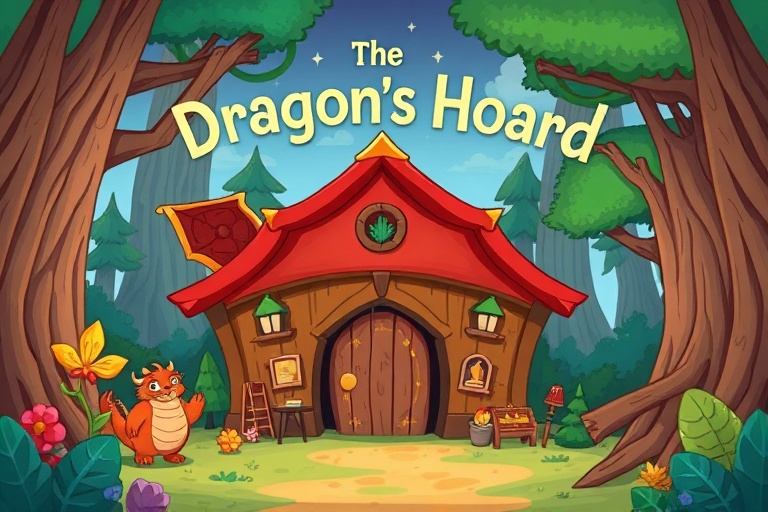
The Dragon's Hoard: A Tale of the Enchanted Forest
Preview
Mastery (C2 High) CEFR C2

The Dragon's Hoard: A Tale of the Enchanted Forest

Deep within the umbral recesses of the Enchanted Forest, where the canopy perpetually occludes the sun and the air is thick with the cloying sweetness of decay, there dwelt a dragon named Ignis. His s...

Duration

5 min read

Length

942 words

Story

10 paragraphs

Story Excerpt

Sample preview reading passage

Paragraphs 1–2 of 10

Deep within the umbral recesses of the Enchanted Forest, where the canopy perpetually occludes the sun and the air is thick with the cloying sweetness of decay, there dwelt a dragon named Ignis. His scales, obsidian and jagged, glimmered with a malevolent iridescence, and his eyes, twin pools of molten gold, surveyed his domain with avaricious intensity. For centuries uncounted, he had amassed a hoard of glittering treasures—not for any utilitarian purpose, but solely to satiate a compulsive, all-consuming greed. The forest itself seemed to recoil from his presence, its ancient trees twisting away as if in silent reproach.

It was decreed, by the venerable and enigmatic Council of the Enchanted Forest, that a grand competition would be held to determine which creature possessed the most refined and comprehensive mastery of the five senses. The victor would be awarded the coveted Amulet of Acuity, a talisman said to sharpen perception to an almost unbearable degree. Ignis, whose hearing could detect the faintest tremor of a falling leaf and whose sight could pierce the densest gloom, regarded the contest with contemptuous certainty. He scoffed at the other competitors—a lithe faun, a sagacious owl, and a nimble sprite—considering their sensory capacities woefully inadequate.


Enjoying the preview?

Sign in to read the full story, track your progress, and earn rewards.

Complete Story & Ending Interactive Vocabulary & Quizzes Track Reading Streak & XP
Educational Objectives

Story Details

Grammar focus and learning objectives covered in this story.

Grammar Level

C2 · Past Perfect Continuous, inversion, participial phrases, complex subordination

Learning Outcomes

  • Recognise and interpret advanced grammatical structures such as past perfect continuous, inversion, and participial phrases in a literary context.
  • Analyse how sensory vocabulary (sight, hearing, taste, touch, smell) is used to convey atmosphere and character development.
  • Infer the moral of the story and evaluate how the theme of sharing is developed through the dragon's transformation.
  • Answer comprehension questions that require synthesis, inference, and evaluation of the text's stylistic and thematic elements.

Grammar Focus

Past Perfect Continuous: had + been + present participle

Used to describe an action that was ongoing in the past up until another past event or time. It emphasizes the duration of the earlier action.

“ For centuries uncounted, he had amassed a hoard of glittering treasures—not for any utilitarian purpose, but solely to satiate a compulsive, all-consuming greed.
Tip: Use the past perfect continuous to show cause and effect in the past, or to describe a background action that was interrupted by a shorter past action.
Inversion after 'not only': Not only + auxiliary + subject + verb

A formal and emphatic structure used to present two related ideas, where the first is introduced with 'not only' and the second with 'but also'. The inversion occurs after 'not only' for emphasis.

“ not only for any utilitarian purpose, but solely to satiate a compulsive, all-consuming greed.
Tip: Remember to invert the subject and auxiliary verb after 'not only' when it begins a clause. This structure is common in formal writing and rhetoric.
Participial phrase: present participle (-ing) clause

A phrase beginning with a present participle that functions as an adjective, modifying a noun or the subject of the main clause. It often indicates simultaneous action or reason.

“ witnessing this unprecedented cooperation, declared the competition a draw
Tip: Ensure the participial phrase logically refers to the subject of the main clause to avoid dangling modifiers.

Reading tip

Daily Habit

Pick stories slightly below your level. Understanding about 95% of the words keeps reading enjoyable and effective.

Create a free account and turn this tip into a daily habit — full stories, quizzes, and progress tracking included.

More Stories to Read

Explore other popular stories from our reading library.

View all