Back to Library
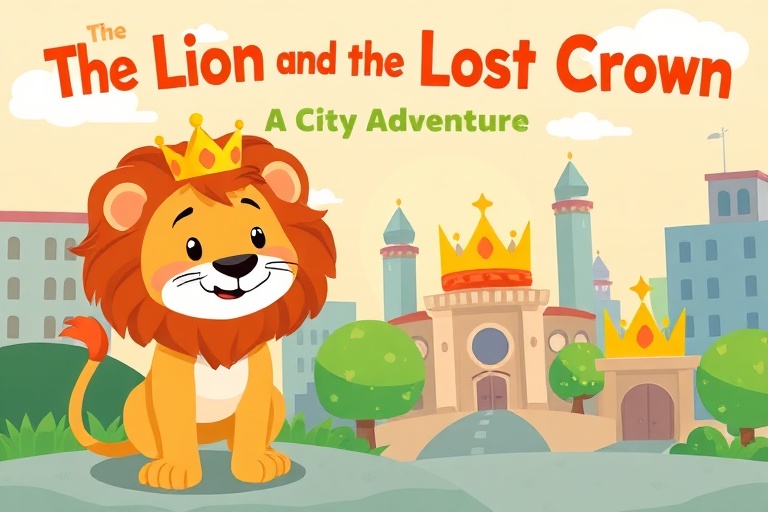
The Lion and the Lost Crown: A City Adventure
Preview
Elementary (A2 Low) CEFR A2

The Lion and the Lost Crown: A City Adventure

Leo the lion lived in a big city. He had a shiny golden crown on his head. One day, the crown fell off and rolled away. Leo looked for it under cars and behind trees. He was very sad because he loved...

Duration

5 min read

Length

135 words

Story

4 paragraphs

Story Excerpt

Sample preview reading passage

Paragraphs 1–2 of 4

Leo the lion lived in a big city. He had a shiny golden crown on his head. One day, the crown fell off and rolled away. Leo looked for it under cars and behind trees. He was very sad because he loved his crown.

Leo met a monkey named Mia in the park. Mia was swinging from a tall tree. 'I lost my crown,' said Leo. 'Can you help me?' Mia said, 'Yes, I will help you.' They looked in the bushes and on the rooftops.

Enjoying the preview?

Sign in to read the full story, track your progress, and earn rewards.

Complete Story & Ending Interactive Vocabulary & Quizzes Track Reading Streak & XP
Educational Objectives

Story Details

Grammar focus and learning objectives covered in this story.

Grammar Level

A2 · Past Simple, Future with 'will', prepositions of place

Learning Outcomes

  • read and understand a short story about a lion and a monkey in a city.
  • recognise and use past simple verbs like 'fell', 'rolled', 'saw', and 'climbed'.
  • use 'will' to talk about future actions and promises.
  • use prepositions of place like 'under', 'behind', and 'up' to describe locations.
  • answer comprehension questions about the story's events and moral.

Grammar Focus

Past Simple: subject + verb-ed (regular) or irregular verb

We use the past simple to talk about actions that happened and finished in the past. For regular verbs, add -ed. Some verbs are irregular, like 'fell' and 'saw'.

“ One day, the crown fell off and rolled away.
Tip: Remember that irregular verbs do not take -ed. Learn common ones like 'fall-fell', 'see-saw', 'go-went'.
Future Simple with 'will': subject + will + base verb

We use 'will' to talk about the future, make promises, or offer help. The verb after 'will' is always in the base form.

“ Yes, I will help you.
Tip: Use 'will' for decisions made at the moment of speaking, like when you offer to help someone.
Prepositions of place: in, on, under, behind, up

Prepositions of place show where something or someone is. 'In' means inside, 'on' means on top of, 'under' means below, 'behind' means at the back of, and 'up' means to a higher position.

“ Leo looked for it under cars and behind trees.
Tip: Draw a picture to help you remember: put a ball in a box, on a table, under a chair, and behind a door.

Reading tip

Daily Habit

Say new words out loud or use them in your own sentence — actively using a word moves it into lasting memory.

Create a free account and turn this tip into a daily habit — full stories, quizzes, and progress tracking included.

More Stories to Read

Explore other popular stories from our reading library.

View all