Back to Library
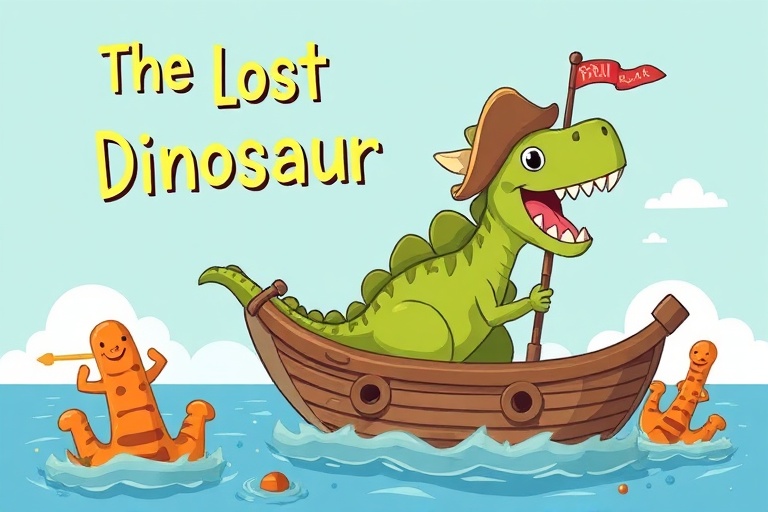
The Lost Dinosaur Pirate
Preview
Elementary (A2 Low) General Reading CEFR A2

The Lost Dinosaur Pirate

Captain Rex was a big green dinosaur. He lived on a pirate ship called the Sea Star. Every day, he helped his pirate friends. They looked for gold and jewels on small islands. Rex was very strong and...

Duration

5 min read

Length

150 words

Story

4 paragraphs

Story Excerpt

Sample preview reading passage

Paragraphs 1–2 of 4

Captain Rex was a big green dinosaur. He lived on a pirate ship called the Sea Star. Every day, he helped his pirate friends. They looked for gold and jewels on small islands. Rex was very strong and kind.

One morning, a thick fog covered the sea. The ship moved slowly through the white mist. Rex could not see the sun or the stars. The captain said, "We are lost!" Everyone looked worried. Rex felt scared too.


Enjoying the preview?

Sign in to read the full story, track your progress, and earn rewards.

Complete Story & Ending Interactive Vocabulary & Quizzes Track Reading Streak & XP
Educational Objectives

Story Details

Grammar focus and learning objectives covered in this story.

Grammar Level

A2 · Past Simple, 'could' for ability, prepositions of place

Learning Outcomes

  • Read and understand a short story about a dinosaur pirate.
  • Recognise and use the past simple tense to talk about past events.
  • Use 'could' to describe past abilities and prepositions like 'above' and 'near'.
  • Answer comprehension questions about the story's main events and moral.

Grammar Focus

Past Simple: subject + verb-ed (regular) or irregular past form

Use the past simple to talk about actions that happened and finished in the past. Regular verbs add -ed, but some verbs are irregular (e.g., 'lived', 'moved', 'saw').

“ Captain Rex was a big green dinosaur.
Tip: Remember that 'was' is the past form of 'be' for singular subjects like 'he', 'she', or 'it'.
Modal verb 'could' for past ability: subject + could + base verb

Use 'could' to talk about someone's ability in the past. It means 'was able to'.

“ Rex could not see the sun or the stars.
Tip: After 'could', always use the base form of the verb (e.g., 'see', not 'saw').
Prepositions of place: in, on, above, near

Prepositions of place show where something or someone is. For example, 'on' means touching a surface, 'above' means higher than something, and 'near' means close to.

“ He put his long neck high above the fog.
Tip: Use 'above' when something is higher but not directly touching, and 'on' when it touches a surface.

Reading tip

Daily Habit

Re-read a story you enjoyed. Each pass deepens comprehension and helps new words stick in long-term memory.

Create a free account and turn this tip into a daily habit — full stories, quizzes, and progress tracking included.

More Stories to Read

Explore other popular stories from our reading library.

View all