Back to Library
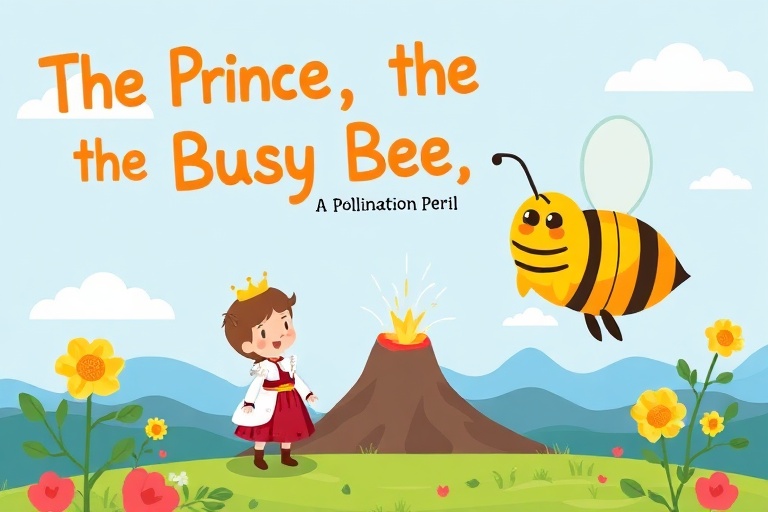
The Prince, the Volcano, and the Busy Bee: A Pollination Peril
Preview
Advanced (C1 Low) CEFR C1

The Prince, the Volcano, and the Busy Bee: A Pollination Peril

Seldom does one encounter a prince as woefully unqualified for villain-confrontation as Prince Percival of Petalburg, yet there he stood, sweating profusely inside a volcano lair that smelled distinct...

Duration

5 min read

Length

650 words

Story

7 paragraphs

Story Excerpt

Sample preview reading passage

Paragraphs 1–2 of 7

Seldom does one encounter a prince as woefully unqualified for villain-confrontation as Prince Percival of Petalburg, yet there he stood, sweating profusely inside a volcano lair that smelled distinctly of rotten eggs and burnt toast. His mission, assigned by a council of exasperated elders, was to stop the villainous Lord Malathor from extinguishing every flower in the kingdom. Not only had Malathor stolen the Royal Pollen Reserve, but he had also brainwashed the palace butterflies into serving as his personal fan-bearers. As Percival tiptoed past a snoozing two-headed guard dog, he tripped over his own cape and landed face-first in a patch of glowing mushrooms.

Scarcely had he regained his footing when a high-pitched buzzing filled the air, and a bee the size of a small horse hovered before him, wearing a tiny waistcoat and an expression of profound irritation. "I am Beatrice, chief pollinator of the Royal Garden," she announced, wings blurring with indignation. "That odious Malathor has sealed the volcano's vents, which means no wind, which means no pollen drift, which means no fruit, no vegetables, and no honey for my colony!" It was not merely the loss of nectar that vexed her, but the impending starvation of every creature that depended on pollination.


Enjoying the preview?

Sign in to read the full story, track your progress, and earn rewards.

Complete Story & Ending Interactive Vocabulary & Quizzes Track Reading Streak & XP
Educational Objectives

Story Details

Grammar focus and learning objectives covered in this story.

Grammar Level

C1 · Inversion, cleft sentences, emphatic structures

Learning Outcomes

  • Recognise and use inversion with 'seldom' and 'scarcely' to add emphasis in formal writing.
  • Explain the process of pollination and its importance for fruits and vegetables using target vocabulary.
  • Identify at least three ways to protect pollinators as described in the story.
  • Answer comprehension questions about the plot and characters at C1 level.
  • Summarise the story in 3-4 sentences using appropriate linking devices.

Grammar Focus

Inversion with 'seldom' (Seldom + auxiliary + subject + main verb)

Use 'seldom' at the beginning of a sentence to emphasize rarity, followed by inversion of the subject and auxiliary verb. This is a formal, literary structure common in C1 writing.

“ Seldom does one encounter a prince as woefully unqualified for villain-confrontation as Prince Percival of Petalburg, yet there he stood, sweating profusely inside a volcano lair that smelled distinctly of rotten eggs and burnt toast.
Tip: Remember to use an auxiliary verb (do/does/did) after 'seldom' when there is no other auxiliary, and keep the main verb in its base form.
Cleft sentences with 'It is/was not only... but also...'

Use this structure to emphasize two related pieces of information, often to highlight a contrast or addition. It adds sophistication and focus to your writing.

“ It was not only the direct produce that mattered, she continued, but the entire web of life: birds that ate the berries, mammals that ate the birds, and farmers whose livelihoods hinged on bountiful harvests.
Tip: Ensure that the two clauses are parallel in structure and that 'but also' introduces a second, equally important point.
Inversion with 'scarcely... when...'

Use 'scarcely' at the beginning of a sentence followed by inversion to indicate that one event happened immediately after another. This is a dramatic, formal structure.

“ Scarcely had he regained his footing when a high-pitched buzzing filled the air, and a bee the size of a small horse hovered before him, wearing a tiny waistcoat and an expression of profound irritation.
Tip: Use the past perfect after 'scarcely' and the simple past after 'when' to show the sequence of events clearly.

Reading tip

Daily Habit

Don’t stop at every unknown word. Guess the meaning from context first, then check — that is how fluent readers build intuition.

Create a free account and turn this tip into a daily habit — full stories, quizzes, and progress tracking included.

More Stories to Read

Explore other popular stories from our reading library.

View all