Back to Library
Nia and the Misty River: A Cartographer's Journey
Preview
Elementary (A2 Low) CEFR A2

Nia and the Misty River: A Cartographer's Journey

Nia is a young cartographer. She makes maps of rivers and hills. One morning, she walks to the misty river valley. The air is cool and soft. She carries a small notebook and a pencil. Nia wants to dra...

Duration

5 min read

Length

200 words

Story

4 paragraphs

Story Excerpt

Sample preview reading passage

Paragraphs 1–2 of 4

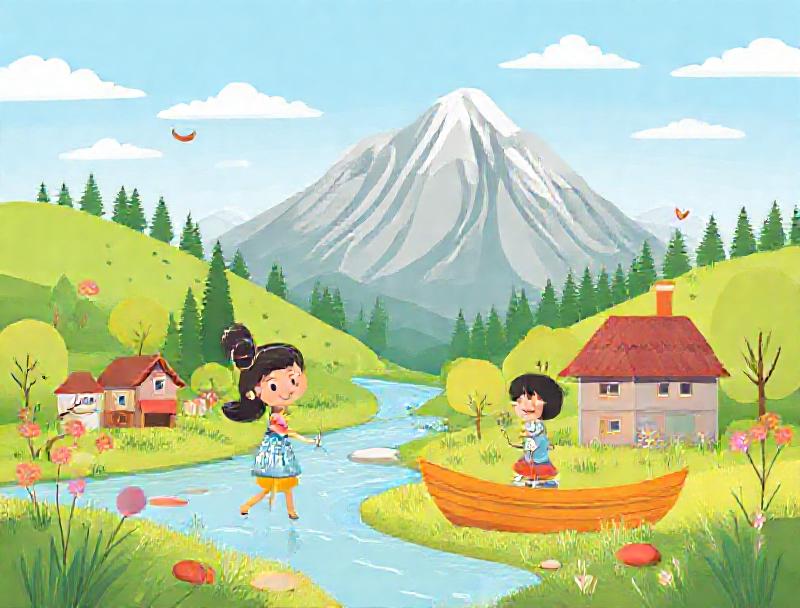
Nia is a young cartographer. She makes maps of rivers and hills. One morning, she walks to the misty river valley. The air is cool and soft. She carries a small notebook and a pencil. Nia wants to draw a new map of the valley.

Yesterday, a big storm came to the valley. The rain was heavy and the wind was strong. The old wooden bridge washed away. Now the river is wide and fast. Nia stops and looks at the water. She feels sad because she cannot cross.


Enjoying the preview?

Sign in to read the full story, track your progress, and earn rewards.

Complete Story & Ending Interactive Vocabulary & Quizzes Track Reading Streak & XP
Educational Objectives

Story Details

Grammar focus and learning objectives covered in this story.

Grammar Level

A2 · Present Simple, Past Simple, Future Simple

Learning Outcomes

  • Read and understand a short story about a young cartographer and her adventure.
  • Recognise and use the present simple, past simple, and future simple tenses in context.
  • Learn and use new vocabulary words: baker, phenomenon, auxiliary.
  • Answer comprehension questions about the story's events and moral.
  • Retell the story in your own words using simple sentences.

Grammar Focus

Present Simple: subject + verb

We use the present simple to talk about facts, habits, or things that are generally true. For example, 'She makes maps' describes what Nia does regularly.

“ She makes maps of rivers and hills.
Tip: Remember to add -s or -es to the verb when the subject is he, she, or it.
Past Simple: subject + verb-ed (regular verbs)

We use the past simple to talk about actions that started and finished in the past. Regular verbs add -ed, like 'washed' or 'walked'.

“ The old wooden bridge washed away.
Tip: For irregular verbs, learn the past form separately (e.g., 'go' → 'went').
Future Simple: will + verb

We use 'will' + base verb to talk about the future, often for decisions or predictions made at the moment of speaking.

“ You will cross the river.
Tip: Use 'will' for all subjects (I, you, he, she, it, we, they) – it never changes.

Reading tip

Daily Habit

Read 10–15 minutes every day. Short daily sessions build vocabulary faster than one long session a week — consistency beats intensity.

Create a free account and turn this tip into a daily habit — full stories, quizzes, and progress tracking included.

More Stories to Read

Explore other popular stories from our reading library.

View all