Back to Library
The Fox in the Castle: A Chessboard Discovery
Preview
High Intermediate (B1 High) CEFR B1

The Fox in the Castle: A Chessboard Discovery

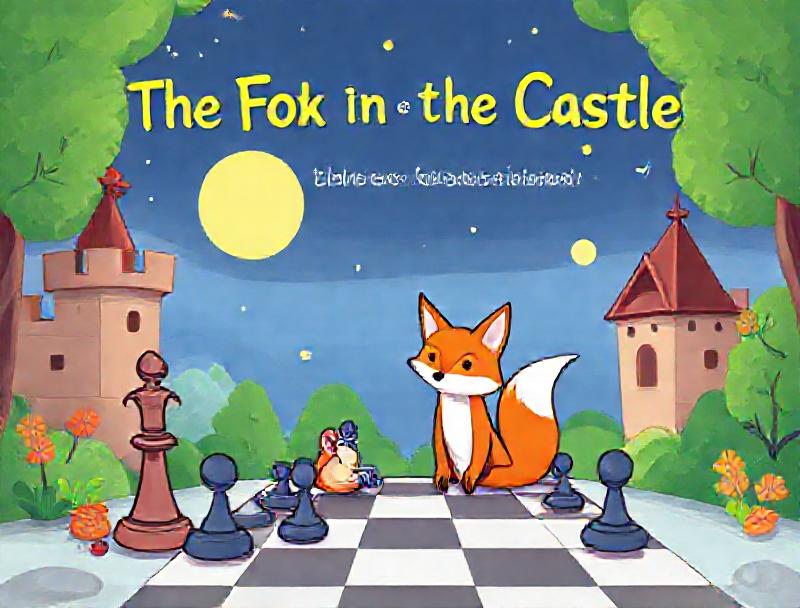
In the heart of an ancient castle, a young fox named Reyna sat before a chessboard. She had always been curious about how her brain planned each move, and today she would finally understand. Her grand...

Duration

5 min read

Length

300 words

Story

5 paragraphs

Story Excerpt

Sample preview reading passage

Paragraphs 1–2 of 5

In the heart of an ancient castle, a young fox named Reyna sat before a chessboard. She had always been curious about how her brain planned each move, and today she would finally understand. Her grandmother, a wise old vixen, watched from a velvet chair. "Your brain is the control center of your body," she said softly. "Every thought, every move, begins there." Reyna nodded, her eyes fixed on the pieces.

As Reyna reached for a knight, her grandmother explained, "Nerves send signals from your brain to your muscles, and back again." Reyna imagined tiny messengers racing through her body. She learned that each signal travels along a neuron, a special cell that carries information. "So when I move this piece," Reyna said, "my brain sends a signal to my paw." Her grandmother smiled. "Exactly, and your memory helps you recall past games."


Enjoying the preview?

Sign in to read the full story, track your progress, and earn rewards.

Complete Story & Ending Interactive Vocabulary & Quizzes Track Reading Streak & XP
Educational Objectives

Story Details

Grammar focus and learning objectives covered in this story.

Grammar Level

B1 · Present Perfect, Conditionals, Past Simple

Learning Outcomes

  • Read and understand a story about how the brain controls the body.
  • Recognise and use vocabulary such as neuron, signal, control, memory, and coordinate.
  • Identify and use the present perfect, second conditional, and past simple tenses.
  • Explain how nerves send messages to and from the brain.
  • Describe ways to keep the brain sharp and healthy.

Grammar Focus

Present Perfect: subject + have/has + past participle

Use the present perfect to talk about experiences or actions that happened at an unspecified time before now, or that have a connection to the present.

“ She had always been curious about how her brain planned each move.
Tip: Remember that 'always' and 'never' often appear with the present perfect to describe life experiences.
Conditional Type 2: If + past simple, would + base verb

Use the second conditional to talk about imaginary or unlikely situations in the present or future.

“ If you let fear control you, you will never improve.
Tip: Note that the example uses 'will' instead of 'would', but the pattern is still a conditional. For true second conditional, use 'would' in the main clause.
Past Simple: subject + verb(-ed) or irregular past form

Use the past simple to talk about completed actions in the past at a specific time.

“ Reyna took a deep breath and focused.
Tip: Regular verbs add -ed, but many common verbs are irregular (e.g., take → took, focus → focused).

Reading tip

Daily Habit

Say new words out loud or use them in your own sentence — actively using a word moves it into lasting memory.

Create a free account and turn this tip into a daily habit — full stories, quizzes, and progress tracking included.

More Stories to Read

Explore other popular stories from our reading library.

View all