Back to Library
The Time Machine's Lost Key: An Untold Story of Respect for Elders
Preview
Advanced (C1 Low) CEFR C1

The Time Machine's Lost Key: An Untold Story of Respect for Elders

Seldom had Anantariya, a brilliant but headstrong physics student, been so consumed by a single obsession. The discovery of a mysterious time machine in her university's forgotten basement had ignited...

Duration

5 min read

Length

520 words

Story

7 paragraphs

Story Excerpt

Sample preview reading passage

Paragraphs 1–2 of 7

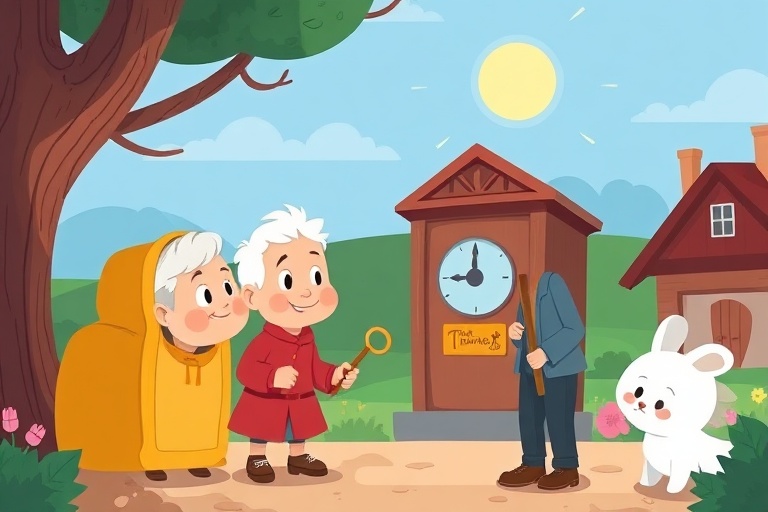
Seldom had Anantariya, a brilliant but headstrong physics student, been so consumed by a single obsession. The discovery of a mysterious time machine in her university's forgotten basement had ignited a fervent desire to uncover its secrets. Not only did she spend every waking hour examining its intricate brass gears and cryptic dials, but she also neglected her studies and her family. Her grandmother, a venerable woman named Sovann, often warned her that some doors are sealed for a reason. However, Anantariya dismissed these admonitions as the superstitious ramblings of an old woman.

It was on a sweltering afternoon that Anantariya finally deciphered the sequence required to activate the machine. No sooner had she uttered the final incantation than the device shuddered, emitting a low, resonant hum. In a blinding flash, she was transported to a bustling marketplace from a bygone era. There, amidst the cacophony of merchants and the aroma of exotic spices, she realized with horror that the machine's key—a small, ornate token—was missing. Without it, she was stranded in the past, utterly alone.


Enjoying the preview?

Sign in to read the full story, track your progress, and earn rewards.

Complete Story & Ending Interactive Vocabulary & Quizzes Track Reading Streak & XP
Educational Objectives

Story Details

Grammar focus and learning objectives covered in this story.

Grammar Level

C1 · Inversion, cleft sentences, past perfect

Learning Outcomes

  • Recognise and interpret inverted structures after negative adverbials in literary texts.
  • Identify cleft sentences and explain how they emphasise specific information.
  • Use past perfect accurately to sequence events in a narrative.
  • Infer character motivation and thematic messages from contextual clues.
  • Answer comprehension questions requiring inference, cause-effect, and vocabulary analysis.

Grammar Focus

Inversion after negative adverbials: 'Seldom had...', 'Not only did...', 'No sooner had...'

When a sentence begins with a negative or restrictive adverb (e.g., seldom, not only, no sooner), the subject and auxiliary verb are inverted to emphasize the statement. This structure adds dramatic effect and is common in formal or literary writing.

“ Seldom had Anantariya, a brilliant but headstrong physics student, been so consumed by a single obsession.
Tip: Use inversion only with negative/restrictive adverbials at the start of a clause, and remember to invert the auxiliary verb with the subject (e.g., 'had she' not 'she had').
Cleft sentences: 'It was on a sweltering afternoon that...'

Cleft sentences split a single idea into two clauses to focus attention on a particular element (often time, place, or reason). They begin with 'It is/was' followed by the focused element and then a relative clause.

“ It was on a sweltering afternoon that Anantariya finally deciphered the sequence required to activate the machine.
Tip: Use cleft sentences to highlight important information; ensure the relative clause uses 'that' or 'who' and maintains subject-verb agreement.
Past perfect: 'had found', 'had been stolen'

The past perfect tense describes an action that occurred before another past action. It is formed with 'had' + past participle and helps clarify the sequence of events in narratives.

“ The woman, whose name was Grandma Mai, had found the key near the riverbank.
Tip: Use past perfect when you need to show which of two past actions happened first; avoid overusing it when the sequence is already clear from context.

Reading tip

Daily Habit

Read 10–15 minutes every day. Short daily sessions build vocabulary faster than one long session a week — consistency beats intensity.

Create a free account and turn this tip into a daily habit — full stories, quizzes, and progress tracking included.

More Stories to Read

Explore other popular stories from our reading library.

View all