



Back to Library
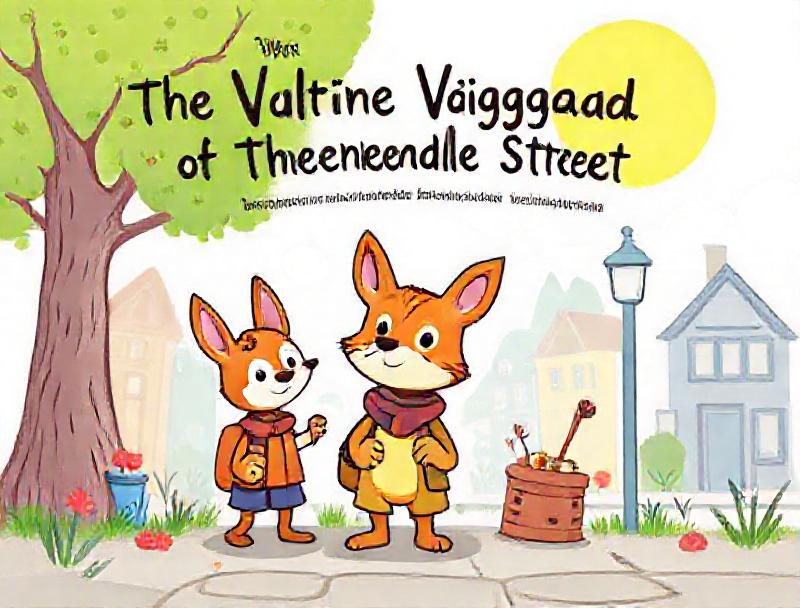
The Vulpine Vagabond of Threadneedle Street: A Cautionary Tale of Unlikely Courage
Preview
Mastery (C2 High) General Reading CEFR C2

The Vulpine Vagabond of Threadneedle Street: A Cautionary Tale of Unlikely Courage

In the labyrinthine thoroughfares of the City of London, where the ceaseless cacophony of double-decker buses and the stentorian cries of stockbrokers coalesce into a symphony of urban pandemonium, th...

Duration

5 min read

Length

1,005 words

Story

10 paragraphs

Story Excerpt

Sample preview reading passage

Paragraphs 1–2 of 10

In the labyrinthine thoroughfares of the City of London, where the ceaseless cacophony of double-decker buses and the stentorian cries of stockbrokers coalesce into a symphony of urban pandemonium, there dwelt a fox of exceedingly dubious pedigree and even more dubious courage. His name was Reginald, though he preferred to be addressed as 'The Ginger Ghost,' a sobriquet he had bestowed upon himself after a particularly harrowing encounter with a wheelie bin that had left him trembling for a fortnight. Reginald was, by his own admission, a creature of profound trepidation, pathologically averse to anything that moved faster than a lethargic snail or made a noise louder than a whisper. His days were spent in the shadowy interstices between skips, his nights in a perpetual state of hypervigilance, convinced that the entire metropolis was a conspiracy designed to unnerve him.

It came to pass, on a drizzly Tuesday morn when the sky was the colour of used dishwater, that Reginald's stomach, that most tyrannical of masters, compelled him to venture further afield than his customary haunts. A tantalising aroma—redolent of discarded kebab and stale croissant—wafted from a bin outside a Greggs on Threadneedle Street, a locale renowned for its frenetic pace and utter indifference to the plight of vulpine interlopers. 'I shall simply dart across,' Reginald assured himself, his voice a tremulous squeak, 'a mere flicker of ginger fur, and none shall be the wiser.' This, as any seasoned urban fox could have foretold, was a fatuous delusion of the highest order.


Enjoying the preview?

Sign in to read the full story, track your progress, and earn rewards.

Complete Story & Ending Interactive Vocabulary & Quizzes Track Reading Streak & XP
Educational Objectives

Story Details

Grammar focus and learning objectives covered in this story.

Grammar Level

C2 · Past Perfect Continuous, inversion with 'No sooner', cleft sentences

Learning Outcomes

  • Recognise and interpret Past Perfect Continuous to describe prolonged past actions.
  • Analyse the emphatic effect of inversion with 'No sooner ... than' in narrative contexts.
  • Identify cleft sentences with 'It was ... that' and explain their focusing function.
  • Infer the moral of overcoming fear through a character's internal conflict and resolution.
  • Evaluate the use of high-register vocabulary and stylistic devices in a literary text.

Grammar Focus

Past Perfect Continuous: subject + had + been + present participle

This tense describes an action that was ongoing in the past up until another past event or time. It emphasises the duration or continuity of the earlier action.

“ He had spent his entire life in a state of abject terror, viewing every human as a potential executioner, every vehicle as a juggernaut of doom, every sound as a clarion call to panic.
Tip: Use it to show cause or context for a later past situation, often with 'for' or 'since' phrases.
Inversion with 'No sooner ... than': No sooner + had + subject + past participle + than + past simple

This formal structure means 'immediately after'. The inversion (had + subject) replaces the usual 'No sooner had he...' word order and adds emphasis.

“ No sooner had his paw touched the tarmac than a monstrous, crimson omnibus bore down upon him, its engine roaring a primal challenge that seemed to emanate from the very bowels of Hades.
Tip: Use 'than' (not 'when') after the second clause, and keep the two actions in immediate sequence.
Cleft sentence with 'It was ... that': It + be + focused element + that/who + clause

This emphatic structure highlights a specific part of the sentence (the focused element) by placing it after 'It was'. It is common in formal and literary writing.

“ It was at this nadir of his fortunes, when all seemed lost and the spectre of a grisly demise loomed large, that Reginald experienced a moment of crystalline clarity.
Tip: Use 'that' for things and 'who' for people; the focused element can be a time, place, or idea.

Reading tip

Daily Habit

Read 10–15 minutes every day. Short daily sessions build vocabulary faster than one long session a week — consistency beats intensity.

Create a free account and turn this tip into a daily habit — full stories, quizzes, and progress tracking included.

More Stories to Read

Explore other popular stories from our reading library.

View all