Back to Library
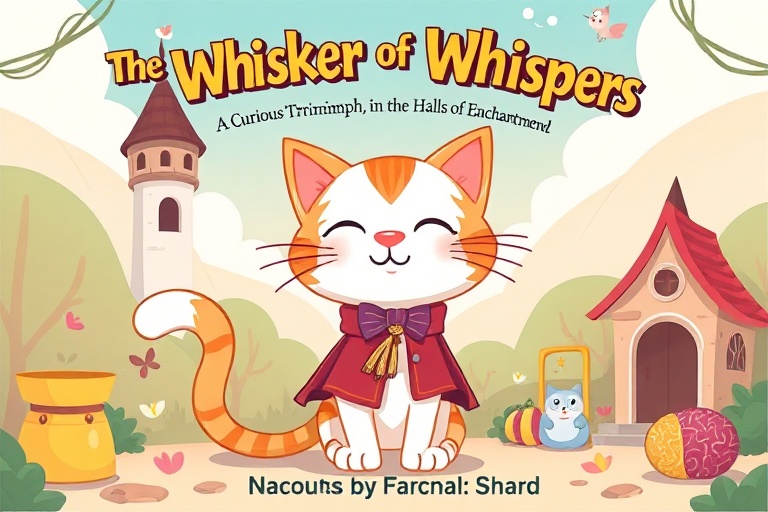
The Whisker of Whispers: A Curious Cat's Triumph in the Halls of Enchantment
Preview
Advanced (C1 Low) General Reading CEFR C1

The Whisker of Whispers: A Curious Cat's Triumph in the Halls of Enchantment

Seldom does a feline as inquisitive as Marmalade find herself perched on the windowsill of the Arcane Academy, yet there she was, her amber eyes wide with wonder. The school, a labyrinthine castle of...

Duration

5 min read

Length

561 words

Story

7 paragraphs

Story Excerpt

Sample preview reading passage

Paragraphs 1–2 of 7

Seldom does a feline as inquisitive as Marmalade find herself perched on the windowsill of the Arcane Academy, yet there she was, her amber eyes wide with wonder. The school, a labyrinthine castle of shifting staircases and whispering portraits, had long been a source of fascination for the stray cat who had wandered in through a half-open portal. Little did she know that her insatiable curiosity would soon entangle her in a web of magic far beyond her humble origins. As she crept along the corridor, her tail twitching with anticipation, she overheard a hushed conversation between two elderly professors about a looming threat beneath the school.

Beneath the academy's foundations, a malevolent creature known as the Gloomshade had begun to stir, its tendrils of darkness seeping into the dungeons and corrupting the magical wards. So potent was its malevolence that even the most seasoned sorcerers hesitated to confront it alone. The professors spoke of an ancient prophecy: only through unity could the beast be vanquished, for it fed on discord and isolation. Marmalade, though merely a cat, felt a peculiar tug at her heart—a sense that she, too, had a role to play in this unfolding drama.


Enjoying the preview?

Sign in to read the full story, track your progress, and earn rewards.

Complete Story & Ending Interactive Vocabulary & Quizzes Track Reading Streak & XP
Educational Objectives

Story Details

Grammar focus and learning objectives covered in this story.

Grammar Level

C1 · Inversion, cleft sentences, passive voice with modals, advanced cohesive devices

Learning Outcomes

  • Recognise and interpret inverted structures with negative adverbials in literary texts.
  • Identify cleft sentences and explain how they emphasize specific information.
  • Use passive voice with modal verbs to discuss hypothetical or necessary actions.
  • Analyse how advanced linking devices create cohesion in narrative paragraphs.
  • Infer the moral of a story by examining character interactions and plot resolution.

Grammar Focus

Inversion: 'Seldom does ...'

This structure is used to emphasize a negative adverbial at the beginning of a sentence, requiring auxiliary 'do/does/did' before the subject. It adds formality and dramatic effect.

“ Seldom does a feline as inquisitive as Marmalade find herself perched on the windowsill of the Arcane Academy, yet there she was, her amber eyes wide with wonder.
Tip: Use inversion with negative adverbs like 'seldom', 'rarely', 'never' to create emphasis; remember to invert the subject and auxiliary verb.
Cleft sentence: 'It was ... who ...'

A cleft sentence splits a single idea into two clauses to focus attention on a particular element, often introduced by 'it was' followed by the emphasized part and a relative clause.

“ It was Marmalade who, with a gentle nudge of her head, brought them together, her purring a soothing balm to their frayed nerves.
Tip: Use cleft sentences to highlight the doer or the action; ensure the relative pronoun agrees with the emphasized noun.
Passive voice with modal: 'could be vanquished'

This construction combines a modal verb ('could') with a passive infinitive ('be vanquished') to express possibility or ability in a passive sense, often used in formal or literary contexts.

“ The professors spoke of an ancient prophecy: only through unity could the beast be vanquished, for it fed on discord and isolation.
Tip: Use passive modals to focus on the action rather than the agent; ensure the past participle is correctly formed.

Reading tip

Daily Habit

Don’t stop at every unknown word. Guess the meaning from context first, then check — that is how fluent readers build intuition.

Create a free account and turn this tip into a daily habit — full stories, quizzes, and progress tracking included.

More Stories to Read

Explore other popular stories from our reading library.

View all