English
 中国人
 ខ្មែរ
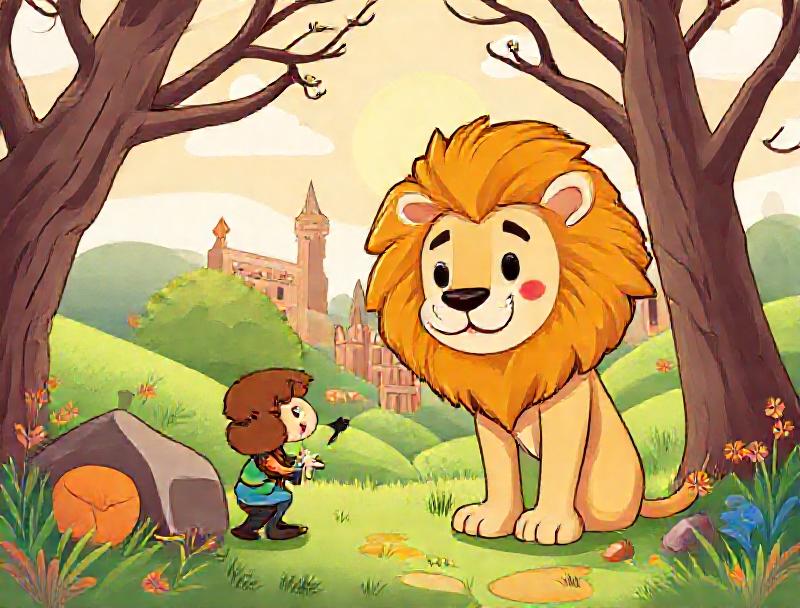
The venerable halls of St. Cuthbert's Academy, ordinarily redolent with the musty aroma of parchment and the subdued murmur of scholarly discourse, were now convulsed by a phenomenon that defied rational explanation. A lion—a veritable, tawny-maned specimen of Panthera leo—had inexplicably materialized within the confines of the school's quadrangle, its presence as incongruous as a sonnet in a calculus textbook. The beast, however, exhibited none of the ferocity characteristic of its species; instead, it prowled the corridors with a disconcerting air of erudition, occasionally pausing to scrutinize a blackboard equation or to sniff disdainfully at a neglected textbook. The headmaster, Dr. Alistair Finch, was apoplectic, his usual composure shattered by the logistical and reputational nightmare now crouching in his prize-winning rose garden.
It fell to a small, unlikely cohort of students to unravel the mystery, for the faculty were too preoccupied with damage control to notice the subtle clues. Among them was Elara Voss, a girl whose unassuming exterior belied a prodigious intellect and an insatiable curiosity. She was joined by her reluctant confederates: Marcus, a skeptic who trusted only empirical data; and Priya, whose intuitive empathy often bridged gaps that logic alone could not. Together, they resolved to discover whence the lion had come and, more perplexingly, why it seemed so profoundly out of place, yet somehow, paradoxically, at home.