Back to Library
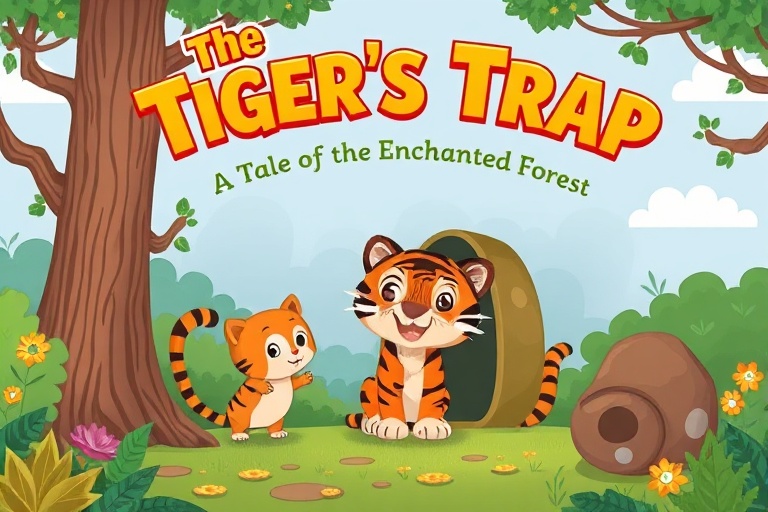
The Tiger's Trap: A Tale of the Enchanted Forest
Preview
Upper Intermediate (B2 Low) Academic CEFR B2

The Tiger's Trap: A Tale of the Enchanted Forest

Deep within the Enchanted Forest, where ancient trees whispered secrets to the wind, a magnificent tiger named Rajah prowled with an air of regal confidence. The forest was known for its bewitching be...

Duration

5 min read

Length

425 words

Story

6 paragraphs

Story Excerpt

Sample preview reading passage

Paragraphs 1–2 of 6

Deep within the Enchanted Forest, where ancient trees whispered secrets to the wind, a magnificent tiger named Rajah prowled with an air of regal confidence. The forest was known for its bewitching beauty, but also for its treacherous traps, which were often concealed beneath a carpet of luminous moss. Rajah, who had always relied on his own strength and cunning, believed himself to be invincible. However, on this particular evening, a subtle shift in the atmosphere suggested that even the most powerful creatures could be humbled by the forest's magic.

As Rajah ventured further into a clearing, his attention was captured by a strange, shimmering fruit that hung from a low-hanging branch. It was said that this fruit could grant heightened senses to those who consumed it, but it was also rumored to be a lure set by the forest's trickster spirits. Without hesitation, Rajah leaped towards the fruit, only to find himself ensnared in a complex web of enchanted vines that tightened around his limbs. The more he struggled, the more constricted he became, and a sense of panic began to rise within him.


Enjoying the preview?

Sign in to read the full story, track your progress, and earn rewards.

Complete Story & Ending Interactive Vocabulary & Quizzes Track Reading Streak & XP
Educational Objectives

Story Details

Grammar focus and learning objectives covered in this story.

Grammar Level

B2 · Past Perfect, Passive Voice, Modal Verbs

Learning Outcomes

  • Recognise and use the past perfect to sequence past events.
  • Identify and interpret passive voice constructions in context.
  • Use modal verbs to express possibility and ability.
  • Infer character development and moral lessons from narrative details.
  • Apply the value of peer review to problem-solving scenarios.

Grammar Focus

Past Perfect: had + past participle

The past perfect is used to describe an action that happened before another action in the past. It helps to establish a clear sequence of events.

“ Rajah, who had always relied on his own strength and cunning, believed himself to be invincible.
Tip: Use the past perfect when you need to talk about something that occurred earlier than the main time frame of your story.
Passive Voice: be + past participle

The passive voice is used when the focus is on the action or the receiver of the action, rather than the doer. It is common in formal or academic writing.

“ It was said that this fruit could grant heightened senses to those who consumed it.
Tip: Use the passive voice to sound more objective or when the doer is unknown or unimportant.
Modal Verbs: could, would, might

Modal verbs are used to express ability, possibility, permission, or obligation. They add nuance to the main verb.

“ However, on this particular evening, a subtle shift in the atmosphere suggested that even the most powerful creatures could be humbled by the forest's magic.
Tip: Remember that modal verbs are always followed by the base form of the verb, and they do not change form for different subjects.

Reading tip

Daily Habit

Read 10–15 minutes every day. Short daily sessions build vocabulary faster than one long session a week — consistency beats intensity.

Create a free account and turn this tip into a daily habit — full stories, quizzes, and progress tracking included.

More Stories to Read

Explore other popular stories from our reading library.

View all