
 English
 中国人
 ខ្មែរ
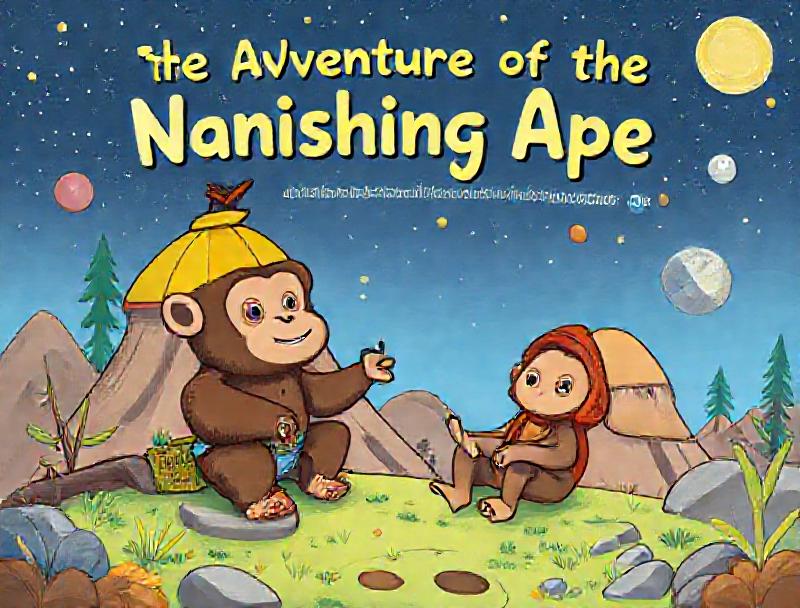
Dr. Elara Voss, an astrophysicist whose tenure at the Max Planck Institute had been punctuated by a series of spectacularly failed grant applications, found herself knee-deep in a Bornean swamp, clutching a machete and a copy of Principles of Stellar Evolution. The irony was not lost on her: she had spent two decades modeling the opacity of stellar atmospheres, yet here she was, swatting mosquitoes the size of drones and questioning every life choice that had led to this moment. Her hypothesis—that the so-called 'Singing Ape' of the ruins was merely a geophonic phenomenon, a trick of wind through limestone—was about to be tested, and she was fairly certain she would rather be lecturing on radiative transfer.
The ruins themselves, a sprawling complex of moss-choked temples and collapsed observatories, had been the subject of wild speculation for centuries. Local legends spoke of a spectral primate whose cries could predict eclipses, a notion that Elara dismissed with the same derision she reserved for astrology and cold fusion. Yet the grant money had come through—surprisingly—from a philanthropic organization devoted to 'unconventional inquiries,' and so she had traded her telescope for a headlamp and her supercomputer for a notebook. Her plan was simple: record the 'song,' analyze its acoustic properties, and demonstrate conclusively that it was nothing more than a resonance artifact of the ruins' peculiar architecture.