



Back to Library
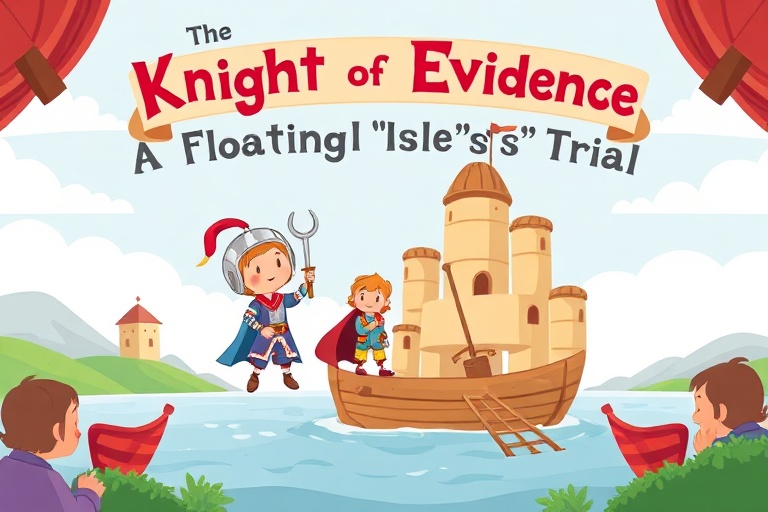
The Knight of Evidence: A Floating Isle's Trial
Preview
High Advanced (C1 High) Academic CEFR C1

The Knight of Evidence: A Floating Isle's Trial

On the floating island of Aethelgard, where cascading waterfalls spilled into the void and bridges of woven light connected craggy peaks, lived a knight named Sir Caelan. He was renowned not for the s...

Duration

5 min read

Length

720 words

Story

8 paragraphs

Story Excerpt

Sample preview reading passage

Paragraphs 1–2 of 8

On the floating island of Aethelgard, where cascading waterfalls spilled into the void and bridges of woven light connected craggy peaks, lived a knight named Sir Caelan. He was renowned not for the strength of his sword arm, but for his unwavering commitment to truth, a virtue that had earned him both admiration and envy. The island's serenity was shattered when the villain Malvox, a cunning sorcerer, began to drain the island's core energy, causing it to descend perilously toward the abyss. While others panicked, Caelan resolved to confront Malvox, but he knew that defeating such a foe required more than mere bravery; it demanded incontrovertible proof of his treachery.

Malvox had woven a web of deceit, presenting himself as a benevolent advisor who claimed the island's decline was due to a curse from ancient gods. He manipulated the council with eloquent lies, and many knights, including Caelan's own brother, had fallen under his sway. Caelan, however, remained skeptical, for he had noticed subtle inconsistencies in Malvox's account: why would the gods curse a peaceful isle, and why did Malvox's quarters glow with an eerie light at night? Determined to uncover the truth, Caelan embarked on a clandestine investigation, knowing that accusing Malvox without evidence would only strengthen the sorcerer's position. His quest was not for glory, but for justice, and he understood that evidence was the only weapon that could pierce Malvox's armor of lies.


Enjoying the preview?

Sign in to read the full story, track your progress, and earn rewards.

Complete Story & Ending Interactive Vocabulary & Quizzes Track Reading Streak & XP
Educational Objectives

Story Details

Grammar focus and learning objectives covered in this story.

Grammar Level

C1 · Past Perfect, Passive Voice, Cleft Sentences

Learning Outcomes

  • Recognize and interpret the use of past perfect to sequence events in a narrative.
  • Analyze how passive voice shifts focus from the doer to the action in formal contexts.
  • Identify cleft sentences used for emphasis and explain their rhetorical effect.
  • Evaluate the role of evidence in argumentation and apply it to critical reading.

Grammar Focus

Past Perfect: had + past participle

Use the past perfect to describe an action that happened before another past action or time. It clarifies the sequence of events in the past.

“ He had also gathered testimony from a former apprentice of Malvox, who confirmed the sorcerer's methods.
Tip: Remember that the past perfect is often used with time expressions like 'before', 'after', or 'by the time' to show which action occurred first.
Passive Voice: be + past participle

Use the passive voice when the focus is on the action or the receiver of the action, rather than the doer. It is common in formal and academic writing.

“ The island's serenity was shattered when the villain Malvox, a cunning sorcerer, began to drain the island's core energy.
Tip: To form the passive, use the correct tense of 'be' and the past participle of the main verb. Ensure the subject receives the action.
Cleft Sentences: It is/was ... that/who ...

Cleft sentences emphasize a particular part of a sentence by splitting it into two clauses. They are used to highlight important information.

“ It was not for glory, but for justice, and he understood that evidence was the only weapon that could pierce Malvox's armor of lies.

Tip: Use cleft sentences to draw attention to a specific element, such as the subject or object. They add emphasis and can make your writing more dramatic.

Reading tip

Daily Habit

Pick stories slightly below your level. Understanding about 95% of the words keeps reading enjoyable and effective.

Create a free account and turn this tip into a daily habit — full stories, quizzes, and progress tracking included.

More Stories to Read

Explore other popular stories from our reading library.

View all