Back to Library
The Primate Protocol: A Laboratory Comedy of Errors
Preview
High Intermediate (B1 High) Academic CEFR B1

The Primate Protocol: A Laboratory Comedy of Errors

Dr. Elena Voss had always believed that truth was the only thing worth pursuing, even if it meant working in a laboratory that smelled like old bananas. However, her latest experiment had taken an une...

Duration

5 min read

Length

378 words

Story

5 paragraphs

Story Excerpt

Sample preview reading passage

Paragraphs 1–2 of 5

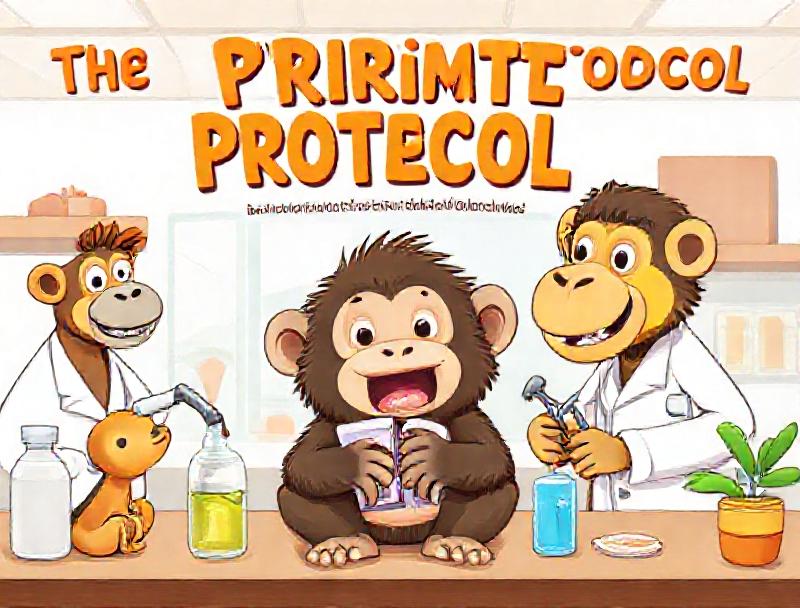
Dr. Elena Voss had always believed that truth was the only thing worth pursuing, even if it meant working in a laboratory that smelled like old bananas. However, her latest experiment had taken an unexpected turn when a capuchin monkey named Milo accidentally drank a vial of experimental truth serum. The serum was designed to make subjects incapable of lying, but Milo had already been a terrible liar. Therefore, when he began speaking in complete sentences, Elena knew her career had just become either brilliant or doomed.

Milo's first words were, "Your coffee is terrible, and the security guard sleeps on Tuesdays." Elena was stunned, but she quickly realized that the monkey could be a valuable asset in stopping the villainous Dr. Grimes. Grimes had been stealing research from labs across the city, and no one could prove it. If Milo could infiltrate Grimes's lab and repeat everything he heard, the truth would finally be exposed. Consequently, Elena began training Milo to act like a normal lab monkey, which was difficult because he kept correcting her grammar.


Enjoying the preview?

Sign in to read the full story, track your progress, and earn rewards.

Complete Story & Ending Interactive Vocabulary & Quizzes Track Reading Streak & XP
Educational Objectives

Story Details

Grammar focus and learning objectives covered in this story.

Grammar Level

B1 · Past Perfect, Third Conditional, Gerunds

Learning Outcomes

  • read and understand a humorous story about a monkey in a laboratory.
  • recognise and use the past perfect to describe actions before other past actions.
  • use the third conditional to talk about imaginary past situations.
  • identify gerunds used as subjects in sentences.
  • answer comprehension questions about the story's plot and moral.

Grammar Focus

Past Perfect: had + past participle

Use the past perfect to talk about an action that happened before another action in the past.

“ Dr. Elena Voss had always believed that truth was the only thing worth pursuing.
Tip: Use 'had' for all subjects (I, you, he, she, it, we, they) and add the past participle of the main verb.
Third Conditional: If + past perfect, would have + past participle

Use the third conditional to imagine a different result for a past situation that cannot be changed.

“ If Milo hadn't been so talkative, the plan would have failed.
Tip: The 'if' clause uses 'had + past participle', and the main clause uses 'would have + past participle'.
Gerund as subject: verb + -ing

Use a gerund (verb + -ing) as the subject of a sentence to talk about an activity in a general way.

“ However, the most important lesson was that honesty, even when it is inconvenient, is always powerful.
Tip: When a gerund is the subject, the verb that follows is singular (e.g., 'Honesty is...').

Reading tip

Daily Habit

Read 10–15 minutes every day. Short daily sessions build vocabulary faster than one long session a week — consistency beats intensity.

Create a free account and turn this tip into a daily habit — full stories, quizzes, and progress tracking included.

More Stories to Read

Explore other popular stories from our reading library.

View all