Back to Library
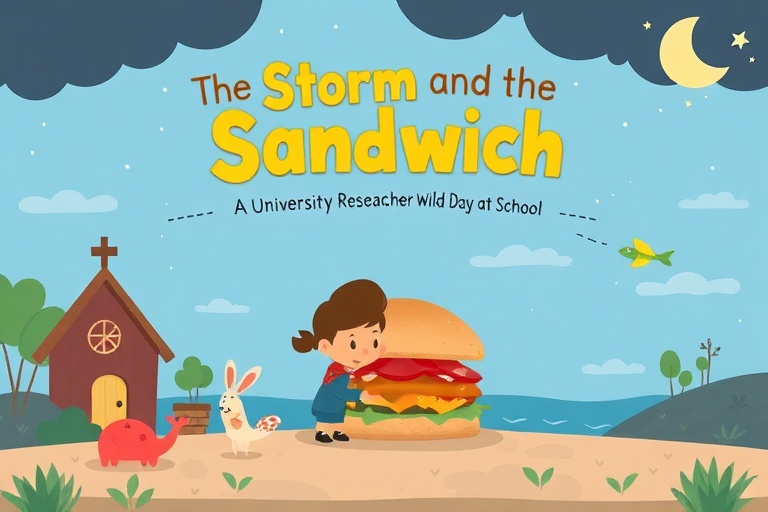
The Storm and the Sandwich: A University Researcher's Wild Day at School
Preview
Elementary (A2 Low) Academic CEFR A2

The Storm and the Sandwich: A University Researcher's Wild Day at School

Dr. Sam was a university researcher. He studied rocks and dirt. One day, he visited a small school. He wanted to talk about his work. The school was near a big forest.Suddenly, the sky turned dark. A...

Duration

5 min read

Length

120 words

Story

4 paragraphs

Story Excerpt

Sample preview reading passage

Paragraphs 1–2 of 4

Dr. Sam was a university researcher. He studied rocks and dirt. One day, he visited a small school. He wanted to talk about his work. The school was near a big forest.

Suddenly, the sky turned dark. A strong storm came fast. The wind blew hard. Rain hit the windows. The children were scared. Dr. Sam said, "Stay calm! We will be safe."


Enjoying the preview?

Sign in to read the full story, track your progress, and earn rewards.

Complete Story & Ending Interactive Vocabulary & Quizzes Track Reading Streak & XP
Educational Objectives

Story Details

Grammar focus and learning objectives covered in this story.

Grammar Level

A2 · Past Simple, Future Simple, prepositions of place

Learning Outcomes

  • read and understand a short story about a storm and sharing.
  • recognise and use past simple verbs like 'was', 'blew', and 'shared'.
  • use 'will' to talk about future actions, as in 'We will be safe.'
  • answer questions about the story's events and characters.
  • understand the moral 'Sharing is caring' and give examples from the story.

Grammar Focus

Past Simple: subject + verb(-ed) or irregular past

We use the past simple to talk about actions that finished in the past. Regular verbs add -ed, but some verbs are irregular (e.g., 'was', 'had', 'blew').

“ Dr. Sam was a university researcher.
Tip: Remember that 'was' is the past of 'be' for I, he, she, it.
Future Simple: subject + will + verb

We use 'will' to talk about the future, like promises or predictions.

“ We will be safe.
Tip: Use 'will' before the main verb without 'to'.
Prepositions of place: in, on, at, near

Prepositions show where something is. 'Near' means close to, 'in' means inside, 'at' means a specific place.

“ The school was near a big forest.
Tip: Use 'near' for things that are close but not inside.

Reading tip

Daily Habit

Say new words out loud or use them in your own sentence — actively using a word moves it into lasting memory.

Create a free account and turn this tip into a daily habit — full stories, quizzes, and progress tracking included.

More Stories to Read

Explore other popular stories from our reading library.

View all