Back to Library
The Cartography of Shadows: A Researcher's Field Notes from Blackwood Manor
Preview
Proficient (C2 Low) Academic CEFR C2

The Cartography of Shadows: A Researcher's Field Notes from Blackwood Manor

Dr. Elias Thorne, a behavioral ecologist whose methodological rigor was matched only by his profound aversion to the irrational, arrived at Blackwood Manor with the grim determination of a man submitt...

Duration

5 min read

Length

1,036 words

Story

9 paragraphs

Story Excerpt

Sample preview reading passage

Paragraphs 1–2 of 9

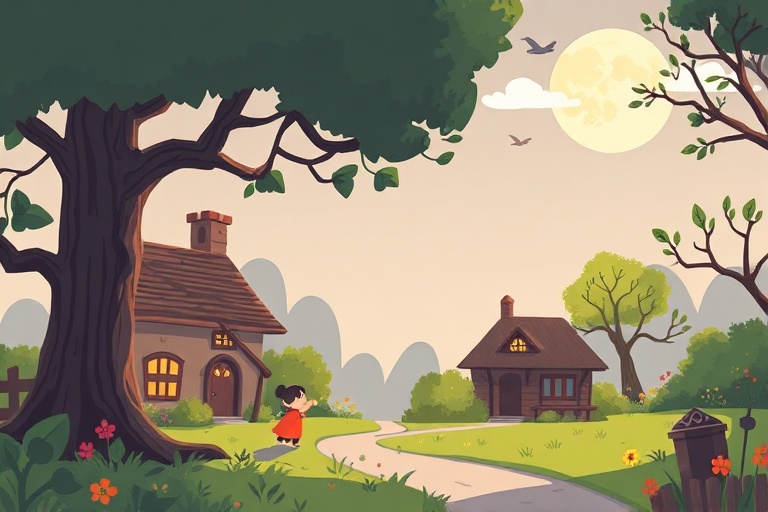
Dr. Elias Thorne, a behavioral ecologist whose methodological rigor was matched only by his profound aversion to the irrational, arrived at Blackwood Manor with the grim determination of a man submitting to a necessary but distasteful medical procedure. His university's tenure committee had, in its infinite and inscrutable wisdom, deemed it essential that he investigate the persistent local folklore surrounding the estate, a task he regarded as intellectually bankrupt. Consequently, he approached the ivy-choked edifice not as a believer, but as a detached observer, his clipboard a shield against the encroaching absurdity of the claims. The mansion, a grotesque amalgamation of architectural epochs, loomed against the bruised twilight sky, its windows like so many vacant, judgmental eyes.

His initial survey was a testament to empirical thoroughness. He measured ambient temperature fluctuations, recorded infrasound levels with a sophisticated microphone, and mapped the electromagnetic fields that credulous paranormal enthusiasts invariably misconstrued as spectral manifestations. Every creak of the ancient floorboards, he attributed to thermal expansion; every flicker of the gaslights, to a faulty regulator. The data, he was confident, would reveal a mundane, physical explanation for the so-called 'hauntings,' thereby exorcising the ghost of superstition with the cold, hard scalpel of science. His hypothesis was elegantly simple: the phenomena were psychosomatic, a collective delusion exacerbated by the manor's oppressive atmosphere.


Enjoying the preview?

Sign in to read the full story, track your progress, and earn rewards.

Complete Story & Ending Interactive Vocabulary & Quizzes Track Reading Streak & XP
Educational Objectives

Story Details

Grammar focus and learning objectives covered in this story.

Grammar Level

C2 · Past Perfect Continuous, inversion with 'not only', cleft sentences

Learning Outcomes

  • Recognise and interpret complex narrative structures that use past perfect continuous to establish background and duration.
  • Analyse the use of emphatic inversion and cleft sentences to evaluate an author's nuanced emphasis.
  • Infer a character's internal conflict and thematic development from subtle linguistic and structural cues.
  • Evaluate the effectiveness of a first-person analytical tone in conveying emotional and psychological transformation.
  • Apply advanced vocabulary related to behavioral science, skepticism, and emotional authenticity in context.

Grammar Focus

Past Perfect Continuous: subject + had + been + present participle

Used to describe an action that was ongoing in the past up until another past event or time. It emphasizes the duration or continuity of the earlier action.

“ He had spent a lifetime hiding behind the impenetrable armor of academic rigor.
Tip: Use this tense to show that an activity was in progress before and leading up to a specific moment in the past, often to explain a cause or background.
Inversion with 'not only ... but also': Not only + auxiliary verb + subject + main verb, but also ...

A formal and emphatic structure where the subject and auxiliary verb are inverted after 'not only' at the beginning of a sentence. It adds dramatic emphasis.

“ Not only did he measure ambient temperature fluctuations, but he also recorded infrasound levels.
Tip: Remember to invert the subject and auxiliary verb after 'not only' when it starts a sentence. The 'but also' clause follows normal word order.
Cleft sentence with 'it is ... that': It + be + highlighted element + that/who + clause

A way to focus attention on a particular part of a sentence by splitting it into two clauses. The highlighted element comes after 'it is' and before 'that/who'.

“ It was a look of such raw, unadulterated humanity that it bypassed Elias's formidable intellectual defenses.
Tip: Use clefts to emphasize a specific detail, often for contrast or dramatic effect. The 'that' clause contains the rest of the information.

Reading tip

Daily Habit

Re-read a story you enjoyed. Each pass deepens comprehension and helps new words stick in long-term memory.

Create a free account and turn this tip into a daily habit — full stories, quizzes, and progress tracking included.

More Stories to Read

Explore other popular stories from our reading library.

View all