English
 中国人
 ខ្មែរ
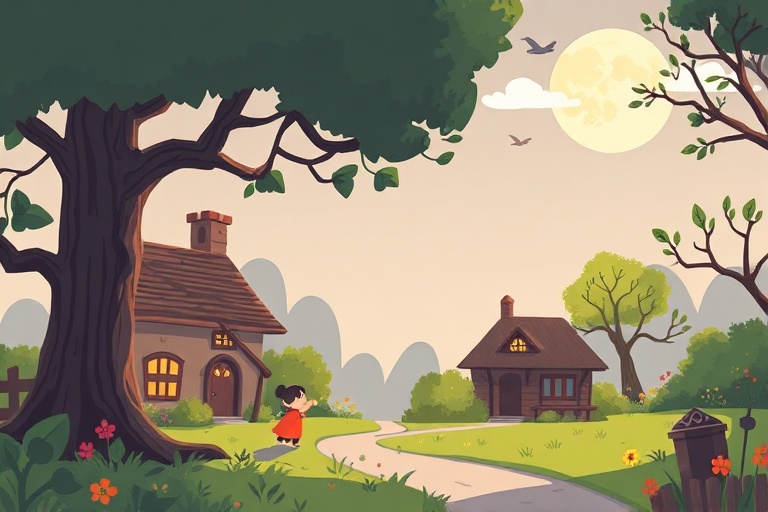
Dr. Elias Thorne, a behavioral ecologist whose methodological rigor was matched only by his profound aversion to the irrational, arrived at Blackwood Manor with the grim determination of a man submitting to a necessary but distasteful medical procedure. His university's tenure committee had, in its infinite and inscrutable wisdom, deemed it essential that he investigate the persistent local folklore surrounding the estate, a task he regarded as intellectually bankrupt. Consequently, he approached the ivy-choked edifice not as a believer, but as a detached observer, his clipboard a shield against the encroaching absurdity of the claims. The mansion, a grotesque amalgamation of architectural epochs, loomed against the bruised twilight sky, its windows like so many vacant, judgmental eyes.
His initial survey was a testament to empirical thoroughness. He measured ambient temperature fluctuations, recorded infrasound levels with a sophisticated microphone, and mapped the electromagnetic fields that credulous paranormal enthusiasts invariably misconstrued as spectral manifestations. Every creak of the ancient floorboards, he attributed to thermal expansion; every flicker of the gaslights, to a faulty regulator. The data, he was confident, would reveal a mundane, physical explanation for the so-called 'hauntings,' thereby exorcising the ghost of superstition with the cold, hard scalpel of science. His hypothesis was elegantly simple: the phenomena were psychosomatic, a collective delusion exacerbated by the manor's oppressive atmosphere.